
Earn Money & Rewards: Prograd
ProgradLifestyle
4.41.26K Reviews
- Version
- 1.9.1
- Installs
- 100.00K
- Age Rating
- Mature 17+
Screenshots
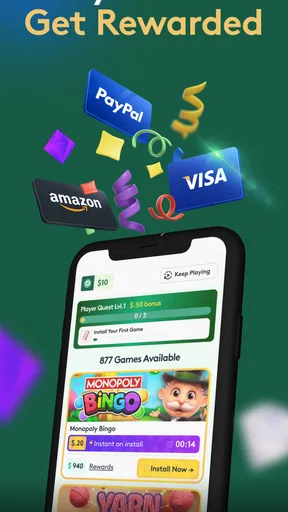

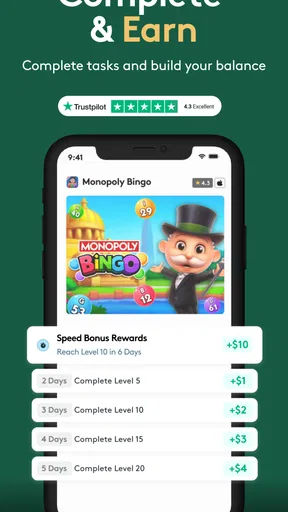
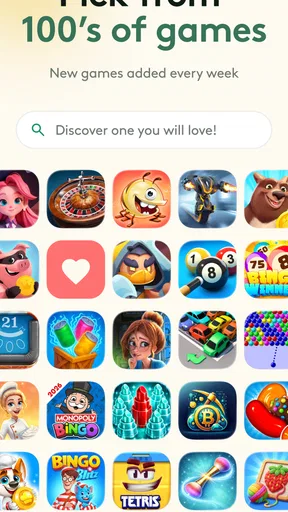
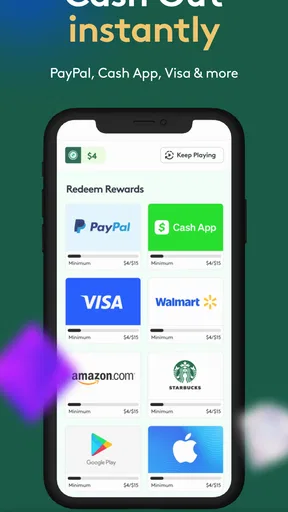
Our Review of Earn Money & Rewards: Prograd
 Analysis by Appyee
I approached Earn Money & Rewards: Prograd as a small lifestyle tool for filling spare moments, not as a replacement for a job or a dependable income source. Its basic idea is easy to understand: you play games, answer surveys, and work toward real cash or gift cards. That combination makes it more flexible than an app built around only one activity, but it also means the quality of the experience depends heavily on what is available to you at a particular moment.
After using it, my main impression is that Prograd works best when I treat it like a controlled break. I can open it while waiting for an appointment, look at the available tasks, and decide whether one is worth my time. The important distinction is that the app rewards patience and selectivity. If I expect every game or survey to produce meaningful money quickly, I am likely to be disappointed. If I see it as a way to turn otherwise unused phone time into occasional rewards, the concept makes much more sense.
How Prograd feels when the connection matters
The app’s central activities naturally depend on communication with its online service. Surveys need to load, game offers need to be displayed, progress has to be recognized, and reward activity needs to be reflected in the account. That makes the quality of my connection part of the user experience rather than a minor technical detail. On a strong home or office connection, browsing opportunities feels straightforward. In a crowded place with an unstable mobile signal, the same process can become hesitant and less predictable.
I found it useful to separate browsing from committing. When I have a reliable connection, I can inspect the available options and read the requirements before starting. That is safer than tapping the first attractive offer in a hurry. A game-related task may require more continued attention than a quick survey, while a survey can stop being worthwhile if its questions become too long or I am screened out. Checking the details first helps me avoid spending time on an activity that does not fit the moment.
This is also where Prograd differs from a normal casual game. With a conventional game, a brief connection problem may be an annoyance before I return to the same level. Here, the connection is tied to the activity and its tracking. I therefore prefer to begin anything important at home or somewhere with a stable signal, rather than during a train ride or in a building where reception changes from room to room.
One practical habit improved my experience: I open the app before I actually have free time. For example, if I know I will be waiting later, I can check what is currently available while connected to Wi-Fi. I do not assume that this makes the activities usable without a network; instead, it lets me understand the choices in advance and avoid making a rushed decision when my signal is weak. That small change makes the service feel less like random tapping and more like planned spare-time use.
Surveys and games create different connection demands
Surveys are usually easier to fit around an unstable day because they are short, focused sessions. Even so, I would not start one while moving between coverage areas. Losing the page at the wrong point can turn a few minutes into wasted effort, and the interruption is especially frustrating when I have already answered several questions. I prefer to complete surveys while stationary, with enough time to finish rather than squeezing them into a few seconds between errands.
Game offers have a different rhythm. They may ask for more repeated interaction, which means the connection issue is not limited to the first screen. A weak signal can make it harder to understand whether progress has been recognized or whether I should continue. My advice is to treat the offer instructions as something to read carefully before playing. The reward is not the only consideration; the time required and the reliability of progress recognition matter just as much.
This distinction is one of the app’s less obvious trade-offs. Games may feel more entertaining than surveys, but entertainment can hide the amount of time being spent. Surveys are less engaging, yet they can be easier to stop after one completed task. I use the game side when I genuinely want a casual distraction and the survey side when I want a shorter, more deliberate session.
Using it in real mobile situations
Prograd fits naturally into waiting-room moments, quiet lunch breaks, and evenings when I want something lightweight to do. The best everyday scenario for me is a planned ten- or fifteen-minute gap: I check the current opportunities, choose one that matches the time available, and stop when the session no longer feels worthwhile. That approach prevents the app from taking over the entire break.
I would be more cautious using it while commuting. A bus or train can seem ideal for rewards, but changing signal strength makes the experience less dependable. Even when the app opens normally, a connection can become unreliable after I start a task. I also avoid using it while walking or doing anything that requires attention. The rewards are not important enough to justify distracted use.
For people with limited mobile data, the game side deserves extra thought. Games can involve more activity than a quick questionnaire, and I do not want an unexpected session to consume data that I need for navigation or communication. I prefer Wi-Fi for browsing and starting longer activities, then use mobile data only when the task is brief and the connection is steady. This is not a promise that every part of the experience behaves the same way on every network; it is simply the most sensible way I found to control the risk.
Another useful routine is to keep reward activity separate from impulse decisions. I set a personal time limit before opening the app. Without one, a game can make me continue because I am already invested, even when the return no longer seems attractive. A timer changes the question from “Can I keep going?” to “Is this still worth the remaining time?” That is a healthier way to use any rewards app, and it is particularly relevant here because Prograd combines earning tasks with activities designed to hold attention.
What happens when a session breaks
Connection failures are the point where expectations matter most. If a page loads slowly, I wait rather than repeatedly tapping. Repeated taps can make it harder to tell whether the app is processing a request or whether nothing happened at all. I also avoid immediately switching between Wi-Fi and mobile data during an active task, because changing networks can make the session’s state confusing.
When something does not respond, my first recovery step is simple: I return to a stable connection and reopen the relevant area. I do not assume that a stalled screen means the activity has been completed, and I do not start the same offer repeatedly without checking what the account shows. Keeping a brief note of the activity I selected, especially for a longer game task, helps me compare what I expected with what appears later.
This is an important limitation for anyone who wants instant certainty. A rewards app is more complicated than a local calculator or an offline puzzle because the result depends on communication between several parts of the experience. Prograd’s appeal is tied to that online model, but the same model can make interruptions feel more serious. I would not use it for a task that I cannot afford to lose time on.
I also recommend patience before deciding that a problem is permanent. A temporary loading issue and a missing reward are not necessarily the same thing. I give the app a chance to refresh on a dependable network, then review the account information carefully. If I need help, I describe what I was doing, when the interruption happened, and whether I had changed networks. Clear details are more useful than a vague complaint that “it did not work.”
The broader lesson is that Prograd rewards an organized workflow. Choose the activity, read its conditions, use a reliable connection, finish without multitasking, and check the result afterward. That may sound more deliberate than opening a normal game, but it is exactly what protects the value of the time I spend.
Keeping data use and expectations under control
The app is free, which makes trying it easy, but “free” does not mean every session is costless. Mobile data, battery, attention, and time all have value. I would not open it repeatedly just to see whether something new appears. A better approach is to check at sensible intervals and choose an activity only when I have enough time and a suitable connection.
I am also careful about the difference between a reward opportunity and guaranteed earnings. The store summary presents cash and gift cards as the goal, but the amount of effort required can vary by activity. Surveys may not suit every profile, and games can take longer than expected. I would never build a monthly budget around this app. It is better viewed as occasional extra value from time I was already going to spend on my phone.
For families, the mature age classification is worth taking seriously. The app is marked for users aged 17 and over, so it is not something I would hand to a younger child simply because it contains games. Adults should also be comfortable making their own decisions about surveys, rewards, and online activity before using it. The age label is part of deciding whether the app belongs on a particular phone.
Prograd comes from Prograd and is listed in the lifestyle category, which matches my experience better than calling it a pure gaming app. The games are one route through the service, but the real purpose is managing reward-oriented activities. That framing helps me compare it fairly with ordinary survey apps, game-reward services, and cashback tools. It is broader than a survey-only option, but it is not necessarily as focused as a specialist service built around one earning method.
The app has an average rating of 4.4 from around 21 thousand ratings, with roughly 1.3 thousand written reviews. More than 100 thousand people have installed it, so it has attracted a meaningful audience without that being a reason to assume it will suit everyone. I read those figures as signs of interest rather than proof of a particular earning result. Individual availability, patience, connection quality, and time management still shape the experience far more than popularity does.
Its current version is 1.9.1, and it runs on Android 7.0 or later. That broad operating-system requirement is helpful if I am using an older Android phone, although an older device may still feel less comfortable during longer sessions. The app was released on September 23, 2025, so I would keep expectations practical: a relatively recent service can change its available activities and interface over time. I check the current screens before committing to a long task rather than relying on what I remember from an earlier visit.
Who benefits most, and who should skip it
I think Prograd is a good match for an adult who enjoys casual games, does not mind answering occasional surveys, and can use a stable connection during planned free time. It is especially suitable for someone who wants more than one type of activity and is willing to compare effort before starting. The ability to choose between entertainment and questionnaires gives it more flexibility than a service that offers only one path.
I would skip it if I need predictable income, dislike online surveys, or become frustrated when a reward task takes longer than expected. It is also a poor choice for anyone with a very limited data plan who cannot regularly use Wi-Fi. A dedicated game may be better for pure entertainment, while a focused survey service may feel clearer for someone who wants only questionnaires. Prograd’s advantage is variety, but variety also means more decisions and less uniformity from one task to another.
My most useful tip is to judge each activity by its total cost, not by its headline reward. Include the time needed to read instructions, wait for pages, play, answer questions, and recover from an interruption. That calculation often changes which option looks attractive. A smaller, quick task can be better than a larger-looking offer that demands repeated attention and a perfect connection.
My connectivity verdict
Connectivity shapes nearly every meaningful part of Prograd. It affects discovery, task selection, progress, and confidence that the session has been recorded properly. I would use it on a stable network, preferably when seated and free from other responsibilities. I would avoid starting longer activities during travel, in weak coverage, or when I am watching my data closely.
Even with those limits, I like the app’s flexible structure. It gives me a choice between surveys and games instead of forcing every spare moment into the same format. The experience becomes worthwhile when I stay selective, protect my time, and remember that rewards are occasional extras rather than guaranteed earnings. The free price makes experimentation low-risk, while the mature age label and online nature mean it still deserves adult judgment.
In the end, I recommend Prograd to people who want a casual, connected way to explore cash and gift-card opportunities and who are comfortable with some uncertainty from task to task. I would not recommend it as a financial solution or as a substitute for a normal game. Used with realistic expectations, a reliable connection, and a clear stopping point, it can turn otherwise idle phone time into a modest reward-oriented routine. The key is to manage the connection and the time, rather than letting either manage you.
Verdict
Strengths of Earn Money & Rewards: Prograd
- Clear tasks make it easy to understand how rewards are earned.
- Useful for discovering discounts, offers, and money-saving opportunities.
- Progress tracking helps users monitor completed activities and rewards.
- The app can encourage better awareness of personal spending habits.
- Suitable for users looking for extra perks from everyday financial activity.
Limitations of Earn Money & Rewards: Prograd
- Reward availability may depend on location, eligibility, or selected partners.
- Some offers can require purchases or additional conditions before payout.
- Earnings are unlikely to replace regular income or provide significant cash.
- Users may need to share financial or personal information to access features.
- Reward processing times may vary and could be slower than expected.
Similar Picks in This Category
View All
SmartThings
Samsung Electronics Co., Ltd.4.6

Google Home
Google LLC4.0

Pinterest4.2

Astrotalk - Talk to Astrologer
Astrology & Horoscope4.7

My Verizon
Verizon Consumer Group4.5

Samsung Wallet (Samsung Pay)
Samsung Electronics Co., Ltd.4.1
Frequently Asked Questions
What is Earn Money & Rewards: Prograd, and how does it work?
Earn Money & Rewards: Prograd is a rewards-focused app designed to help users earn money or other benefits by completing eligible activities. Depending on the offers available in your region, these may include surveys, promotional tasks, shopping-related activities, or other partner offers. After completing an activity and meeting its requirements, the reward is usually credited to your account, although verification and processing times can vary.
Is Earn Money & Rewards: Prograd legitimate and safe to use?
The app may be useful for users who want to earn small rewards in their spare time, but it should not be viewed as a replacement for a job or reliable income. Before using it, review the developer information, privacy policy, permissions, and reward terms carefully. Avoid providing unnecessary sensitive information, and remember that legitimate rewards platforms can still involve third-party offers and data-sharing practices.
How much money can I realistically earn with Prograd?
Your earnings depend on the number of available offers, your location, eligibility, completion quality, and the time you are willing to spend. Most users should expect modest supplementary rewards rather than substantial income. Some activities may pay more than others, but higher-value offers can require additional steps, purchases, account verification, or participation in an external service, so always check the conditions before starting.
How can I redeem rewards earned in the app?
Redemption options and minimum withdrawal requirements may differ according to your country, account status, and the current offers supported by Prograd. Look in the app’s rewards, wallet, or cash-out section for the available methods and any processing details. Before completing tasks, confirm that you can use the preferred payment option, since rewards may be subject to review, expiration rules, or additional verification.
Why might a completed offer or reward be delayed or rejected?
Rewards are not always credited immediately because Prograd or its offer partners may need to verify completion, confirm that eligibility rules were followed, and detect duplicate or fraudulent activity. A reward can also be rejected if tracking failed, an offer was completed previously, required steps were missed, or information did not match. Keep screenshots and transaction details, then contact in-app support if an eligible reward remains missing.
